CASE - KATTEGAT
Electrifying the Kattegat corridor
Nordic Ferry Infrastructure launched the electrification of the Kattegat corridor, marking the start of the largest maritime electrification project to date. Strategically, the project reinforces NFI’s position as a global leader in maritime decarbonisation.
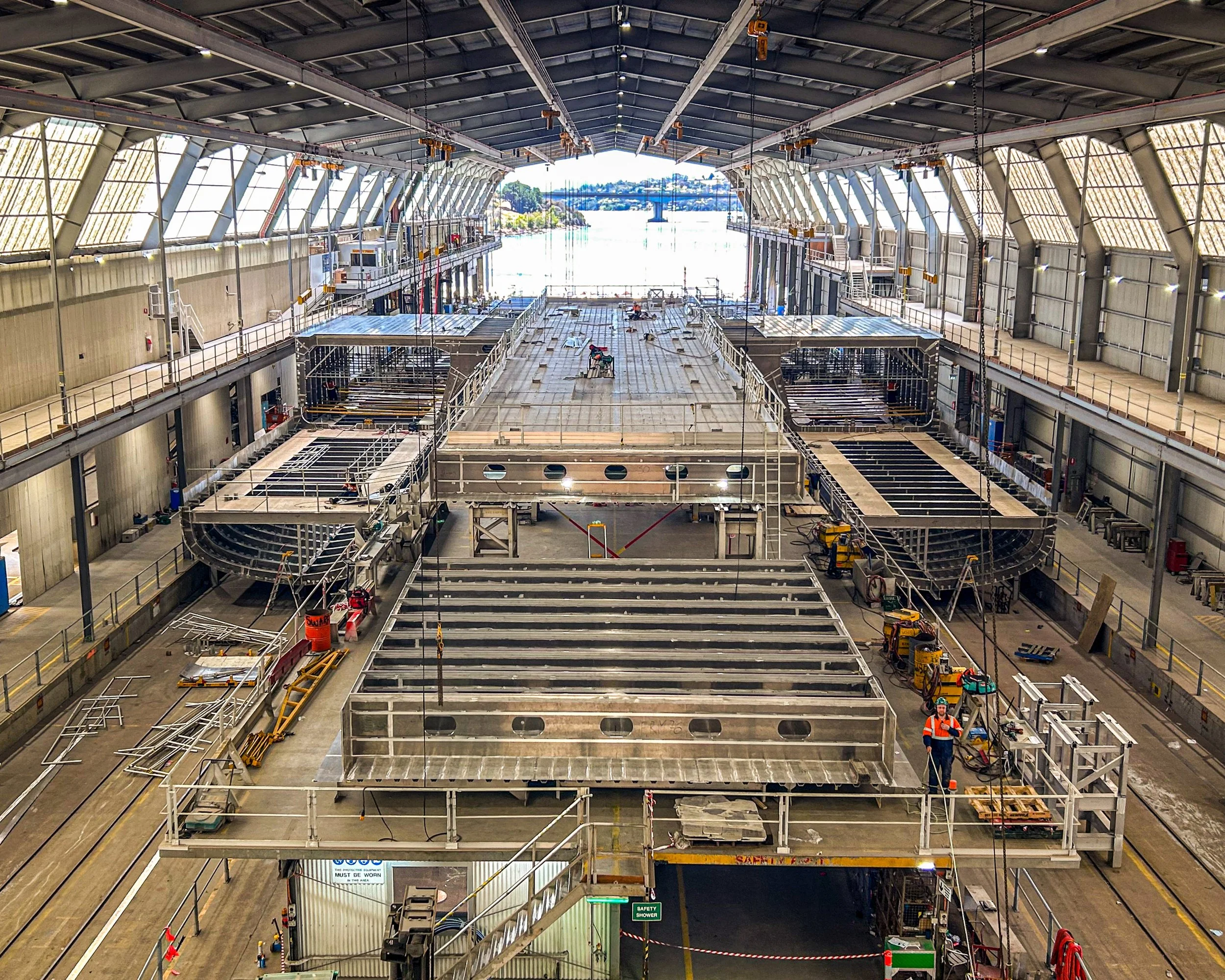
History in the making from the Incat yard in Tasmania. © Incat Tasmania
The Kattegat ferry corridor connects Aarhus and Ebeltoft with Sjællands Odde, providing a vital sea link between eastern and western Denmark. For commuters, families and businesses, the crossing is a well-established part of everyday travel, offering a fast and reliable alternative to the longer journey via land-based connections.
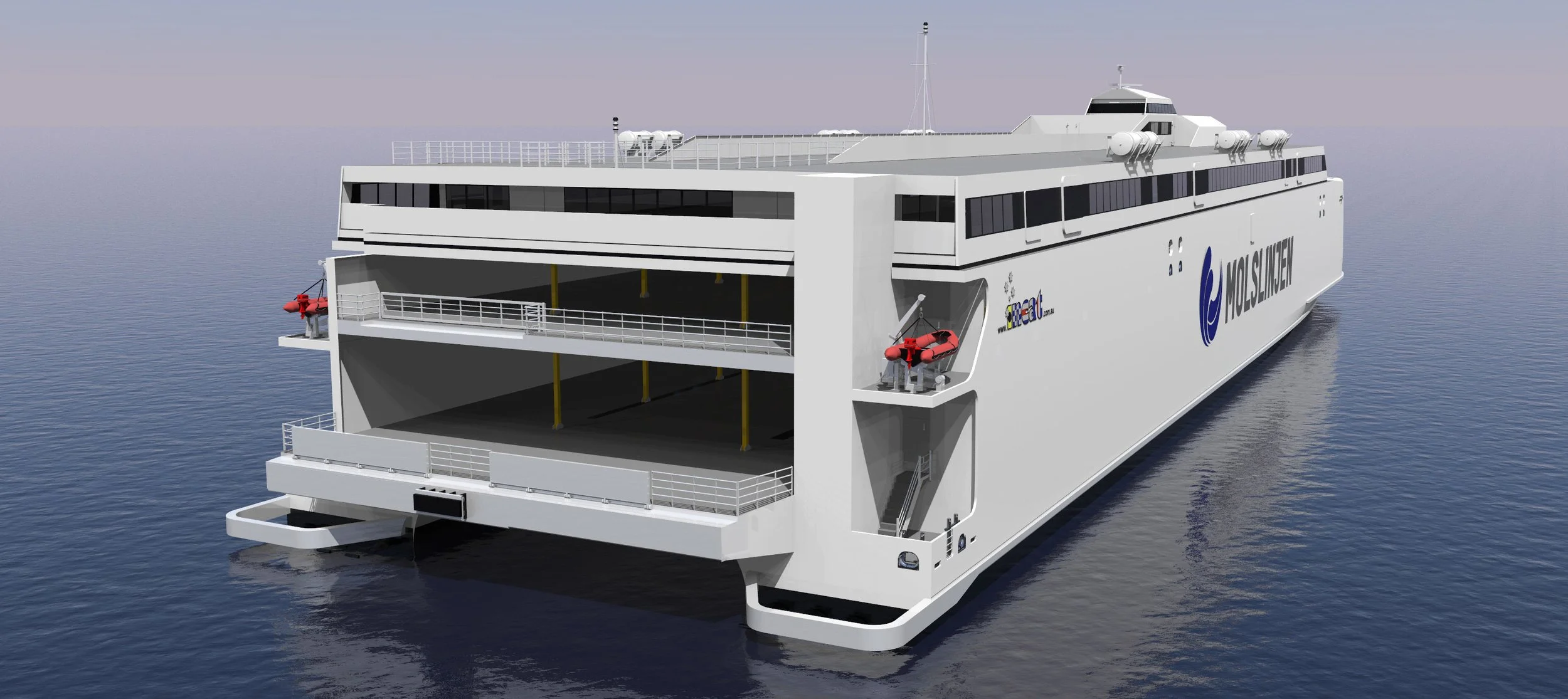
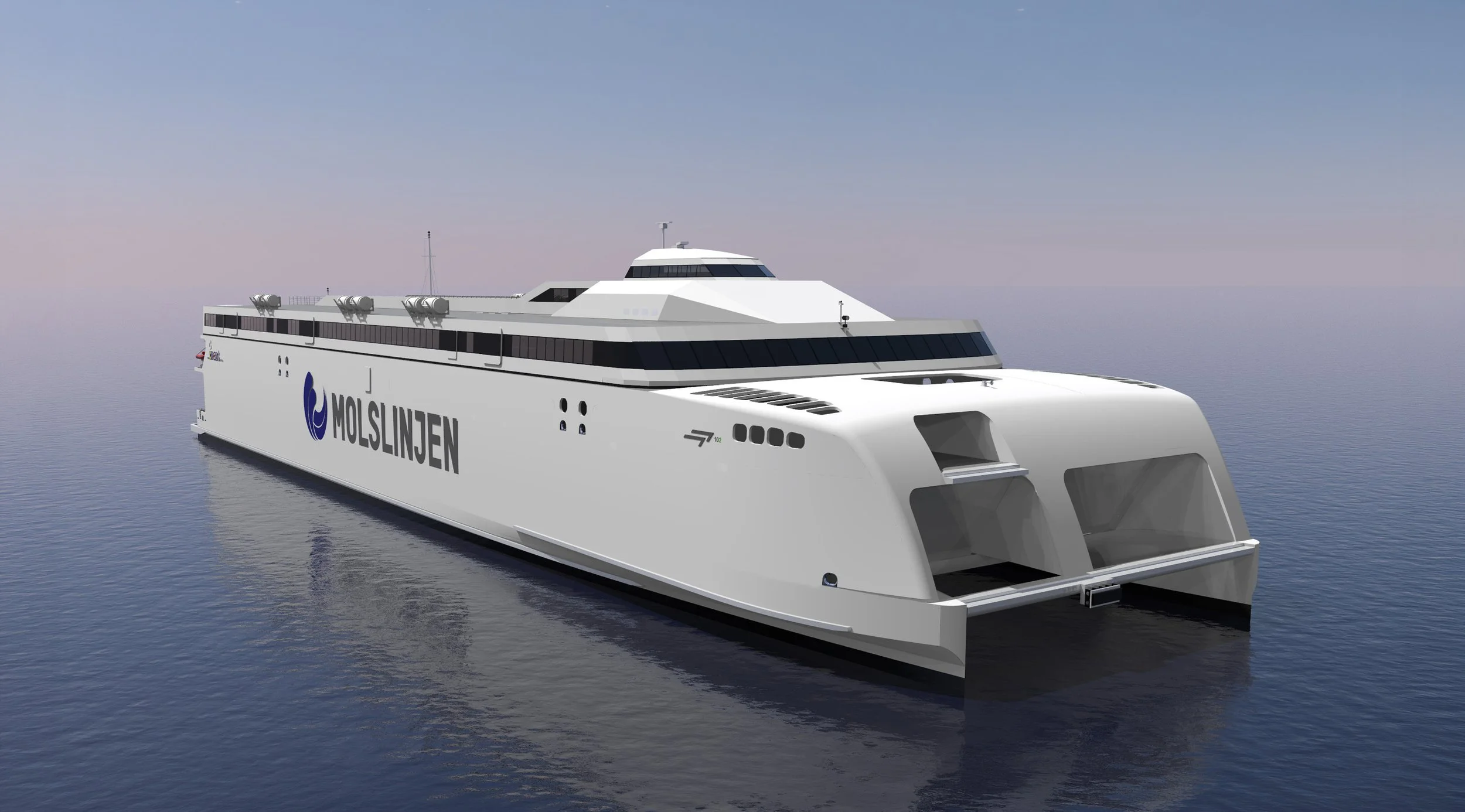
The Kattegat-project will replace the existing diesel-powered high-speed ferries with three battery-electric catamarans, supported by high-capacity onshore charging and associated energy infrastructure. Once fully implemented, the electrified solution will enable zero-emission operations on one of Northern Europe’s most heavily trafficked ferry corridors. Full electric operation is targeted by the end of 2028, positioning the Kattegat route among the longest and fastest fully electrified ferry connections globally.
Vessels and infrastructure
The three new catamarans are designed to combine zero-emission propulsion with high operational performance. Each vessel will maintain the current crossing time of approximately 90 minutes while increasing total car capacity by around 44%. The vessels will be equipped with large-scale battery systems and fully integrated electric propulsion, enabling speeds exceeding 40 knots.
Significant onshore infrastructure investments are being implemented in both Aarhus and Sjællands Odde. These include grid upgrades, new transformer stations and high-capacity shore power delivering up to 55 MW at 15 kV AC, enabling charging in approximately 30 minutes. Energy storage and power management systems will ensure grid stability and reliable operations.
Once again, Denmark is leading the way by turning new technology into real green transformation – while at the same time safeguarding competitiveness and jobs.
This is strong, and it is green action that works.
Lars Aagaard
Denmark’s Minister for Climate, Energy and Utilities
Timeline and funding
Orders for the three vessels were placed in 2025, alongside the initiation of planning and permitting for onshore infrastructure. Construction is already well underway, with delivery and commissioning expected in late 2027 and throughout 2028.
The project has received public support of DKK 180 million under Denmark’s Investment Support Scheme (Investerings støtteordningen 2025), aimed at supporting CO2-intensive industries in their transition. The remaining investment is financed through NFI’s green financing framework.
Environmental and strategic impact
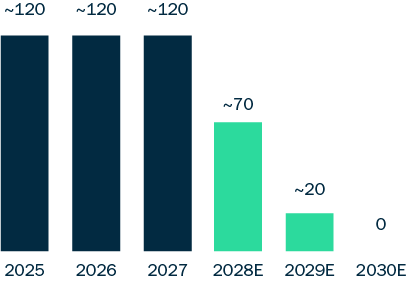
Once fully operational, the electrification of the Kattegat route is expected to reduce annual CO2 emissions by more than 100 000 tonnes and eliminate oil consumption of 5 000 - 6 000 litres per departure. This single project represents roughly one-third of NFI’s total annual emissions in 2025, making it one of the most significant decarbonisation initiatives in the Group’s history. Importantly, these environmental gains are achieved without compromising service levels and operational reliability.
Strategically, the project strengthens NFI’s role as a global leader in maritime decarbonisation. Its scale and technical complexity create competitive barriers and support long-term value creation through improved operating economics and reduced exposure to regulatory and fuel price risks.
Technical specifications
Speed: >40 knots (74 km/h)
Length: 129 m x 30.5 m
Capacity: 1 500 passengers
and 500 cars/vessel
Battery capacity: 45 000 kWh/vessel
Charging: 15 kV AC, up to 55 MW,
30-minute charging time
Propulsion: Fully integrated electric
systems with waterjets
Shipyard: Incat, Tasmania
Annual GHG emissions (ktCO2)