CASE - DK PORTFOLIO
Decarbonising
the Danish route
portfolio
Electrification is a core strategic priority for our Danish operation and a central element in contributing to NFI’s long-term decarbonisation ambitions. The transition towards a fully electric fleet is progressing step by step, combining new vessel investments, fleet conversions and the use of low-emission fuels.
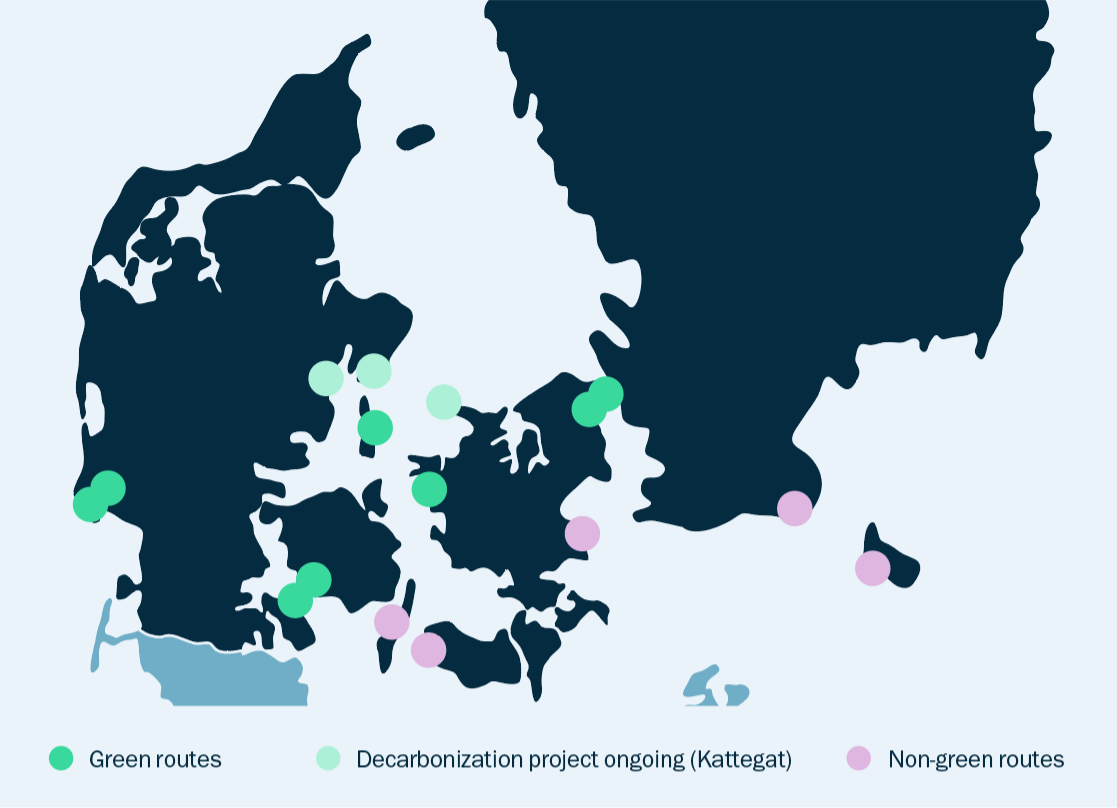
In 2025, Molslinjen reached several important milestones in the journey to decarbonise its Danish route portfolio. Molslinjen placed orders for three battery-electric high-speed catamarans for the Kattegat route between Aarhus and Sjællands Odde. The vessels are currently under construction and will replace the existing diesel-powered fleet. Once commissioned, the new ferries are expected to reduce annual CO2 emissions on the Kattegat route by more than 100 000 tonnes, while maintaining high speed, capacity and operational reliability.
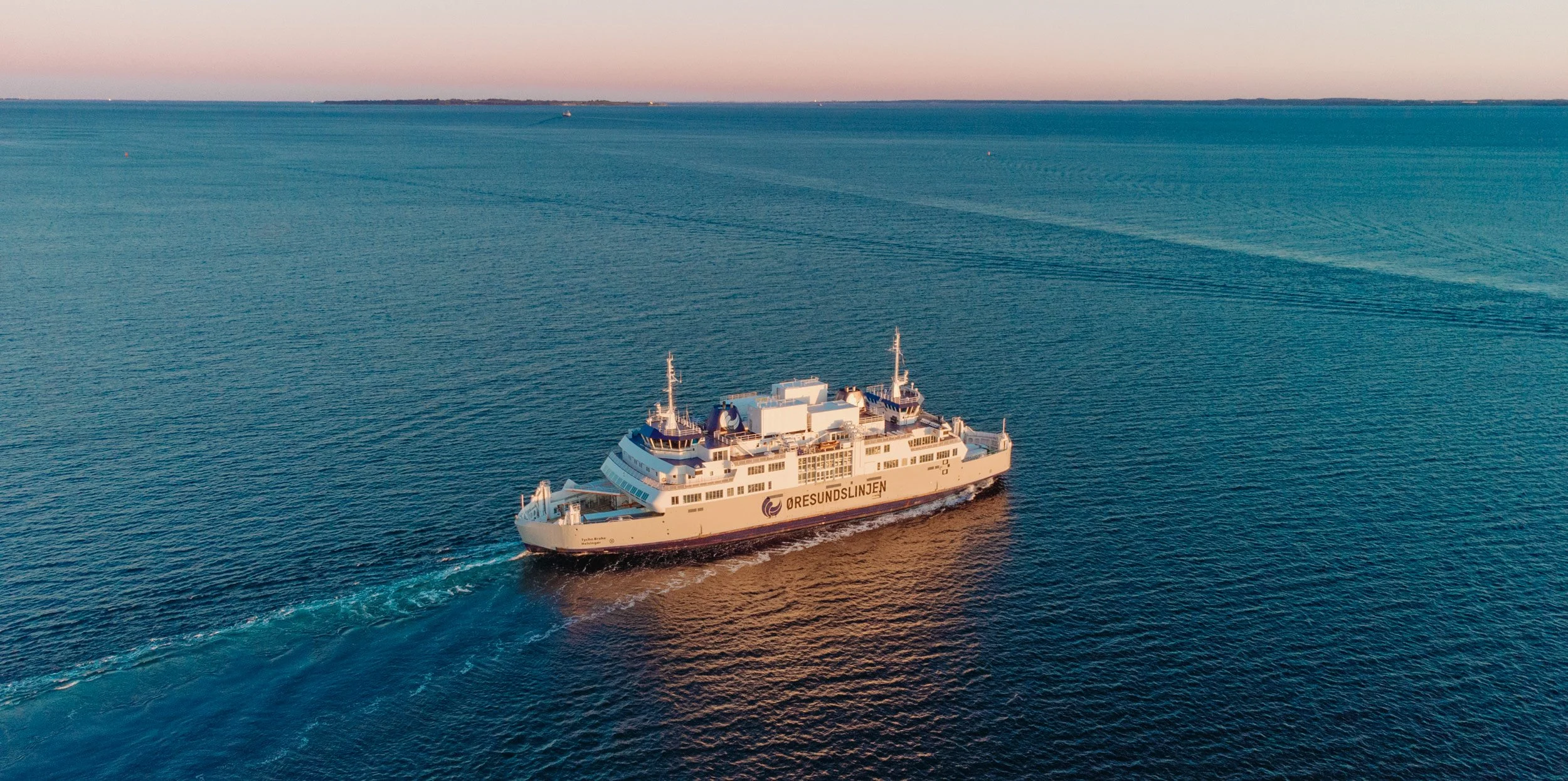
Further progress was made through the conversion of Hamlet on Øresundslinjen to battery-electric operation. Since 2017, the gradual electrification of the three main passenger ferries operating between Helsingør and Helsingborg has reduced annual CO2 emissions by approximately 35 000 tonnes, corresponding to around 80% of total emissions on the route.
The conversion of Hamlet to battery-electric operation will contribute to an overall ~80% reduction in CO2 emissions on the Helsingør–Helsingborg crossing since 2017.
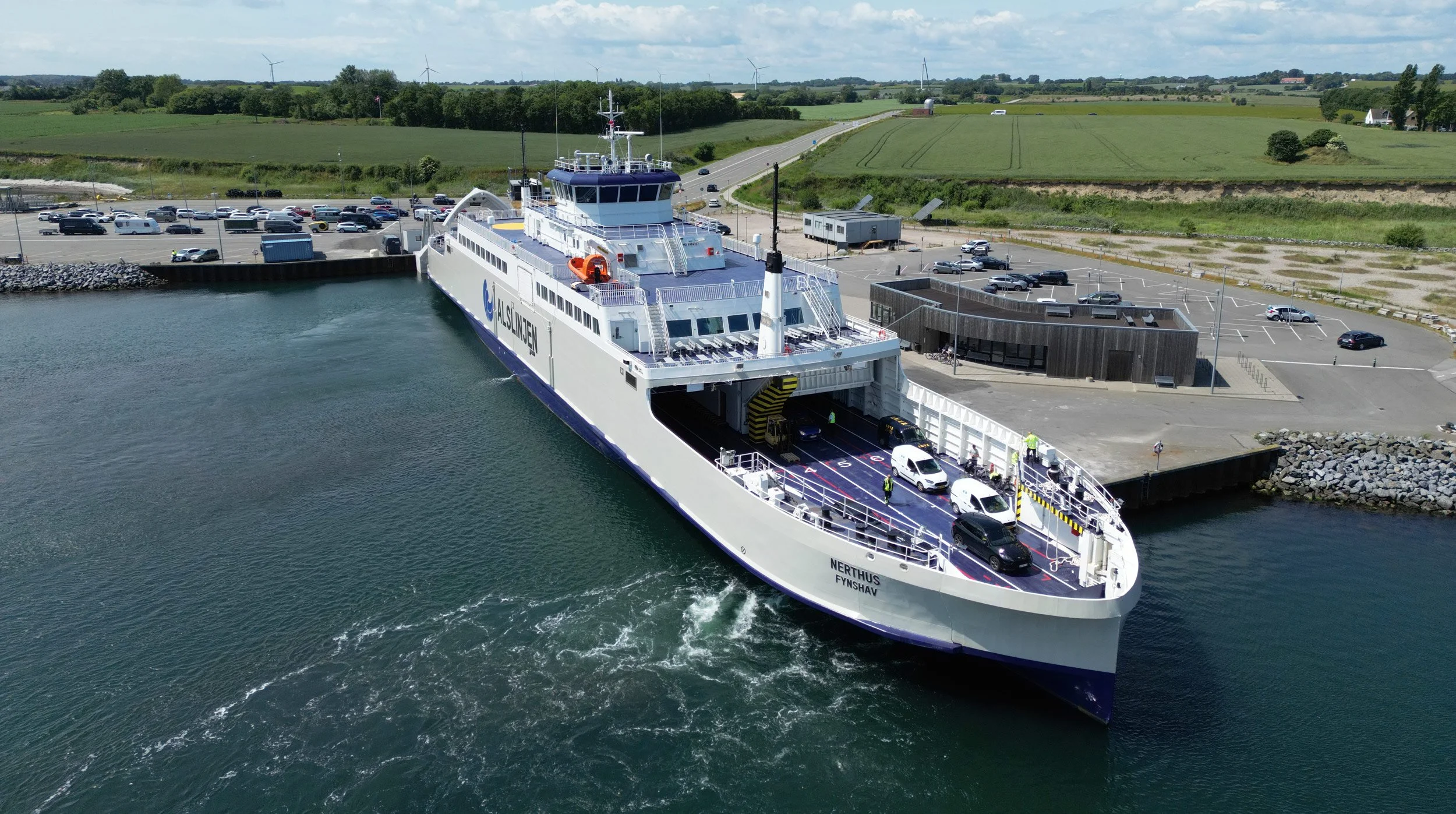
Molslinjen’s electrification efforts also extend to its regional routes. The delivery of vessels Nerthus and Tyrfing fully decarbonises Alslinjen and Samsølinjen, both important routes in our West corridor. On the Fanø route, the ferry Grotte operates on electricity, while the two remaining ferries, Fenja and Menja, operate on HVO. This combination delivers significant emission reductions while ensuring reliable operations on the route.
The remaining routes that are not yet operating on green fuels are Langelandslinjen in the West corridor and Bornholmslinjen. The concession on Langelandslinjen expires in 2028, and it is expected that the tender for the next concession period will require electric operations. For Bornholmslinjen, the current concession runs until 2030. Due to the limited energy infrastructure and capacity on the island of Bornholm, it is still uncertain if the corridor can be electrified in time for the next concession period.
Taken together, these initiatives mean that a substantial share of Molslinjen’s route network already is or will be fully electrified or operating with significantly reduced emissions in the near future. The progress achieved during 2025 reflects Molslinjen’s systematic and scalable approach to fleet decarbonisation and supports NFI’s broader strategy of investing in future-proof, low-emission ferry infrastructure.